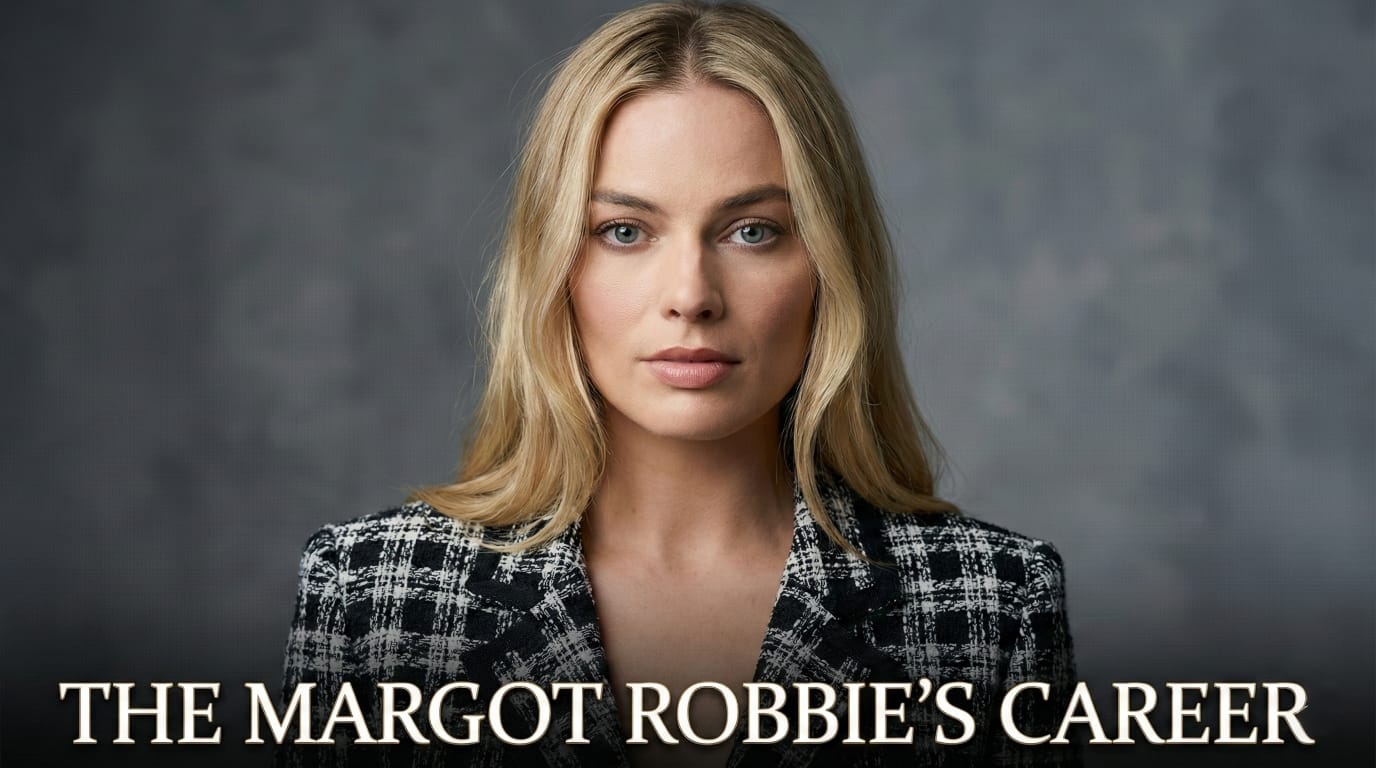
Margot Robbie’s career doesn’t read like a plan. It reads like a series of decisive interruptions. She enters a space, destabilizes expectations, and leaves with leverage. That pattern has repeated often enough that it can’t be dismissed as luck. It’s strategy — even if it never announces itself that way.
When Robbie first crossed into Hollywood’s center, she wasn’t framed as inevitable. She was framed as striking. Beautiful. Capable. Dangerous in a way the industry has always struggled to categorize. Instead of leaning into that confusion, she learned how to use it.
Beauty Was the Door, Not the Room
The industry initially treated Robbie’s appearance as her defining asset. She understood that this framing was both an opportunity and a trap. So she moved quickly — not away from visibility, but toward complexity.
Her performances resisted comfort. She chose roles that complicated perception, that carried volatility, ambition, and moral ambiguity. She didn’t wait for permission to be taken seriously. She behaved as though seriousness was already assumed.
That posture changed the conversation around her faster than any press cycle could.
Control Arrived Early
What separates Robbie from many of her peers is how early she began thinking beyond performance. She didn’t treat acting as an endpoint. She treated it as access.
Production followed naturally. Not as a vanity extension, but as infrastructure. She understood that stories gain power when you own their framing — and that influence grows when you decide what gets made, not just how it’s performed.
That shift altered her relationship with Hollywood. She wasn’t waiting for roles. She was shaping pipelines.
Choosing Risk Over Repetition
Robbie could have built a career on familiarity. The industry would have supported it. Audiences would have rewarded it. Instead, she chose risk — tonal shifts, genre pivots, characters that refused easy admiration.
This wasn’t rebellion. It was calibration. She balanced mainstream presence with artistic volatility, never staying in one lane long enough to become predictable.
That refusal to settle became her signature.
The Intelligence of Reframing Power
Robbie’s most important skill may be reframing. She understands how power is perceived — and how to redirect that perception. When she steps into large-scale projects, she does so with intent. When she steps back, it’s equally deliberate.
She doesn’t confuse visibility with authority. She builds authority quietly, then uses visibility to extend it.
That sequence matters.
Cultural Timing and the Long View
Robbie’s ascent aligns with a moment when Hollywood is being forced to reconsider who controls narrative weight. She doesn’t posture as a disruptor. She operates as a participant who understands leverage.
Her influence isn’t loud. It’s structural. She creates space — for stories, for voices, for complexity — and then occupies it with confidence.
Why Her Career Feels Different
There’s a calm inevitability to Margot Robbie’s presence now. Not because she dominates the industry, but because she understands it. She moves through Hollywood with the assurance of someone who knows where the exits are — and where the control rooms live.
Her career isn’t built on spectacle. It’s built on decisions. Accumulated, intentional, and forward-looking.
That’s what makes it durable.
The Real Legacy in Motion
Margot Robbie’s story isn’t about defying typecasting or transcending beauty. It’s about refusing to be limited by initial framing. She didn’t fight the system head-on. She learned its mechanics — then adjusted them.
The result is a career that feels authored rather than assigned.
And that may be the most powerful kind of stardom there is.
Also Read:
- Paul Mescal: The Quiet Intensity Behind a Modern Actor’s Rise
- Tyla: The Global Rise of a Star Who Moves to Her Own Rhythm
- Jacob Elordi: The Quiet Transformation of a Modern Leading Man
- Kanye West: Genius, Disruption, and the Complicated Legacy of a Cultural Architect
- Sabrina Carpenter: The Long Game of Becoming Unavoidable